These institutions partner with a company called Flock to provide ineffective, expensive AI survellance cameras. The AI makes mistakes leading to wrongful arrests all the time, and the data, stored on non-governmental servers, is searchable without a warrant.
-
Flock surveillance cameras is ineffective at reducing gun violence
Independent research shows Flock surveillance cameras in Champaign are rarely used for that purpose [source] [source]
Urbana—which refused to deploy Flock surveillance cameras—saw a larger drop in gun violence than Champaign after their purchase of Flock survellance cameras. [source]
-
Flock is expensive
The City fo Champaign pays more than $1.15 million, or more than $228,000 annually [source]
-
Flock data has been shared illegally with federal agencies
Flock has been caught violating the Trust Act in multiple Illinois cities [source] [source] [source]
-
Flock relies on Artificial Intelligence
AI is imperfect and prone to mistaken identity [source] [source]
-
Flock is prone to abuse
Flock data is nationally searchable without a warrant. Police in Texas have used it to track a woman seeking an abortion, and it has been abused many times for stalking and harassment [source] [source] [source] [source]
Frequently Asked Questions
What is Flock Group Inc.?
Flock Group Inc. is a private company that provides Automated License Plate Readers (ALPRs) and other surveillance equipment to law enforcement and private entities. ALPRs are cameras that continuously capture, process, and interpret the license plates, vehicle images, and locations of every car that drives past them.
How is the City of Champaign using Flock equipment?
The City of Champaign recently approved a five-year, $1,154,200 contract with Flock to expand its surveillance network to include 62 fixed cameras, 4 mobile units, and 18 intersection "Public Safety Camera" systems throughout the city.
Who approved these cameras?
While the Champaign Police Department requested the technology, it is the Champaign City Council that holds the purse strings and has repeatedly voted to expand this surveillance network without hosting town halls or actively seeking community feedback. Here is how the program grew:
- December 2021: The City Council authorized an initial two-year, $240,000 pilot program for 46 Flock cameras. According to city documents, Champaign did not specifically seek community input before this vote. This was in stark contrast to neighboring Urbana, which hosted multiple town halls in partnership with the local NAACP before their council initially voted against the cameras.
- December 2023: After a brief Study Session in November, the City Council doubled down. They bypassed any broad community review of the pilot program's actual efficacy, instead swiftly approving a massive five-year, $1.1 million contract to add 16 new license plate readers at intersections across the city.
- February 2024: The Council voted again to amend the city budget, funneling another $145,000 into 18 new "Public Safety camera boxes" capable of real-time monitoring and license plate reading at major intersections.
As for the university, that's not a democracy, and the Board of Trustees can do whatever they want without public input.
What is the justification given for AI surveillance cameras?
To reduce gun violence (see Community Gun Violence Prevention Blueprint), but they are largely ineffective at that (see next FAQ).
Are these AI surveillance cameras effective at combatting gun violence in Champaign?
No. While the primary justification for bringing Flock cameras to Champaign was to reduce gun violence, independent analyses show the technology is rarely used for that purpose. An audit of 54 crimes "solved" using Flock cameras in Champaign during its first nine months revealed that only 26% were gun-related felonies. The vast majority of the time, the cameras were used for minor offenses, non-gun felonies (like stolen vehicles), or non-criminal incidents.
Furthermore, while Champaign saw a drop in shootings after 2021, the neighboring city of Urbana—which refused to deploy Flock—saw a larger drop in shootings during the exact same period, proving that expensive surveillance networks are not the only, or even the primary, driver of violent crime reduction.
How much do Flock cameras cost Champaign taxpayers?
Champaign is spending over $1.15 million on the current Flock Safety contract, or over $228,000 annually.
How could this money be better spent to address gun violence?
This money would be far better spent addressing the root causes of crime by investing in historically underprivileged neighborhoods. For example, the city has previously allocated funds toward community violence reduction programs, reentry support, and neighborhood revitalization, and could bolster these effective efforts. Relying on Flock represents a reactionary choice to increase the police state rather than investing in basic community needs like infrastructure, social safety nets, and community trust.
Who does Flock Safety share data with?
While Flock Safety and local police often claim that data sharing is strictly a "local decision," the reality of Flock’s sprawling, interconnected network tells a different story. Officially, Champaign Police have shared access to their camera network with dozens of other departments, ranging from local campus police to the Illinois State Police, and even out-of-state agencies like the Chesterfield County Police Department in Virginia.
However, the sharing goes much deeper than local agreements. Flock’s standard contracts often grant the company a perpetual, royalty-free, worldwide license to use, reproduce, and distribute local agency data for broad "crime-prevention efforts". Furthermore, Flock integrates its database with the Regional Information Sharing Systems (RISS)—a massive, federally-funded data-sharing network. Five of the six regional RISS centers have direct access to the Flock database, effectively acting as a backdoor that allows thousands of federal, state, and international agencies to access local data. Because of these overarching networks and features like "National Lookup," Illinois Flock data has already been improperly accessed by U.S. Customs and Border Protection (CBP) and an out-of-state Texas sheriff who was tracking a woman seeking an abortion.
In Illinois we have the TRUST Act, which prevents sharing Flock data with ICE, right?
In theory, yes, but in practice, no. While the Illinois TRUST Act legally prohibits local police from providing federal entities like ICE with direct access to local electronic databases for civil immigration enforcement, Flock Safety’s interconnected technology creates multiple loopholes, backdoors and sidedoors that effectively bypass these state protections.
Have any other cities ended their Flock contracts?
Many have, and the list is growing every day. Here are a few:
- Austin, Texas
- Bay City, Michigan
- Cambridge, Massachusetts
- Coralville, Iowa
- Denver, Colorado
- Eugene, Oregon
- Evanston, Illinois
- Flagstaff, Arizona
- Longmont, Colorado
- Oak Park, Illinois
- Oxnard, California
- Santa Cruz, California
- Syracuse, New York
- Verona, Wisconsin
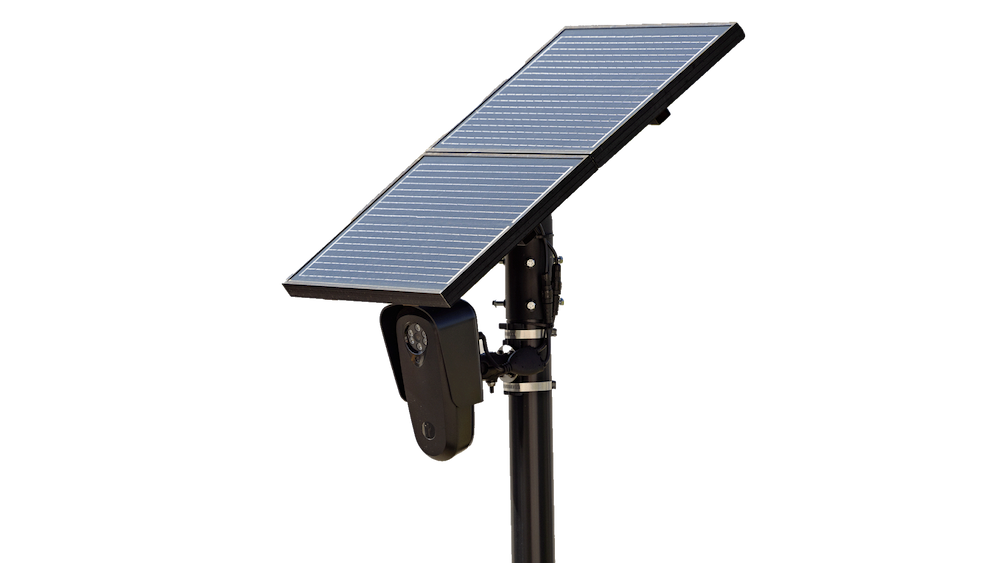 Flock cameras are mounted on poles near intersections and look like this.